

Launching a brand in Bangladesh is easier than it was a few years ago.
Building a brand that people remember, trust, search for, and eventually buy from is a different challenge.
Whether you are launching a fashion brand, restaurant, real estate company, hotel, healthcare business, software company, EdTech platform, automotive business, or consumer product, the same question eventually appears:
How do you turn a business idea into a brand that can attract customers consistently?
The answer is not simply a logo, Facebook page, website, or advertising campaign.
A successful brand launch in Bangladesh requires a clear understanding of your market, customer, positioning, offer, digital presence, content, search visibility, advertising, sales process, and customer experience.
This guide explains how to launch a brand in Bangladesh step by step, from market research and positioning to SEO, AI search visibility, paid advertising, launch campaigns, and post-launch growth.
What Does It Mean to Launch a Brand in Bangladesh?
Launching a brand means introducing a business, product, or service to a defined market with a clear identity and reason for customers to choose it.
A proper brand launch can include these 16 topics
- Market research
- Customer research
- Competitor analysis
- Brand positioning
- Naming and visual identity
- Product or service development
- Pricing
- Website development
- SEO
- Social media
- Content marketing
- Paid advertising
- Launch campaigns
- Sales systems
- Analytics and conversion tracking
- Customer retention
There is an important difference between launching a business and launching a brand.
A business launch puts an offer into the market. A brand launch gives customers a reason to remember, trust, and choose that offer.
That distinction becomes especially important when you are competing in a crowded market.
Step 1: Research the Bangladesh Market Before Launching
Do not start with the logo.
Start with the market.
Before investing heavily in branding, inventory, advertising, or a large website, understand whether there is a meaningful customer problem and how existing businesses are solving it.
Your research should answer:
- Who are the potential customers?
- What problem are they trying to solve?
- How frequently do they buy?
- What alternatives do they currently use?
- What price are they comfortable paying?
- What prevents them from purchasing?
- Where do they search for information?
- Which brands do they already trust?
- What complaints do customers have about existing options?
Understand Your Target Customer
Avoid defining your audience as:
“Everyone in Bangladesh.”
That sounds large, but it provides almost no useful marketing direction.
Instead, define your initial customer around specific characteristics such as:
- Age
- Location
- Income or purchasing power
- Profession
- Lifestyle
- Buying behavior
- Interests
- Pain points
- Purchase motivation
- Common objections
- Preferred communication channels
For example, a premium skincare brand may initially target urban customers who research ingredients, authenticity, reviews, and product quality before making a purchase.
That is much more actionable than simply saying “women in Bangladesh.”
Research Search Demand
Google searches can reveal what potential customers are already trying to understand.
Look for searches related to:
- Products
- Services
- Prices
- Problems
- Comparisons
- Locations
- Reviews
- Alternatives
- Buying decisions
For example, a customer may search:
“best office chair in Bangladesh”
But another customer with stronger purchase intent may search:
“ergonomic office chair price Bangladesh”
Another may search:
“office chair shop in Dhaka”
These represent different stages of the buying journey.
Understanding those differences helps you build a more effective marketing strategy.
Step 2: Identify the Problem Your Brand Will Solve
Customers do not buy businesses.
They buy solutions to problems, desires, or goals.
Before launching, clearly define what your brand helps customers accomplish.
For example:
A clothing brand may solve:
- Poor sizing
- Limited premium options
- Low-quality materials
- Unreliable online shopping experiences
A software company may solve:
- Manual processes
- Poor reporting
- Operational inefficiency
- Communication problems
A real estate company may solve:
- Lack of trustworthy property information
- Complicated purchasing processes
- Poor customer communication
- Difficulty finding suitable properties
A hotel may solve:
- Lack of premium accommodation
- Poor business-travel experience
- Inconsistent hospitality
- Limited facilities in a particular location
The clearer the problem, the easier it becomes to create your positioning and marketing message.
Use a Simple Positioning Framework
A useful starting point is:
We help [specific customer] achieve [specific outcome] through [specific solution].
For example:
We help growing Bangladeshi businesses generate qualified B2B leads through search-driven digital marketing.
This is more useful than:
We provide high-quality digital marketing services.
The second statement could describe thousands of companies.
Your positioning should explain why your brand exists and who it is built for.
Step 3: Analyze Your Competitors
Before launching a brand in Bangladesh, study the businesses already competing for your customer’s attention.
You have 8 types of competitors
- Direct competitors
- Indirect competitors
- Marketplace sellers
- International brands
- Local businesses
- Social-media-first businesses
- Search-visible companies
- Established offline businesses
Study their:
- Products
- Services
- Pricing
- Offers
- Positioning
- Websites
- Social media
- Reviews
- Search visibility
- Content
- Advertising
- Customer complaints
- Customer experience
The objective is not to copy them.
The objective is to discover where the market is already crowded and where customers remain underserved.
Look for Competitor Gaps (most vital part ever)
Ask:
- What are customers complaining about?
- Which questions are competitors not answering?
- Which customer segment receives little attention?
- Are competitors competing almost entirely on price?
- Is their website difficult to use?
- Is their information outdated?
- Are customers struggling to contact them?
- Are there important search queries nobody is addressing properly?
These gaps can become opportunities for your brand.
Step 4: Define Your Brand Positioning
Once you understand the market and customer, decide how you want your brand to be perceived.
A brand can position itself around factors such as:
- Premium experience
- Convenience
- Expertise
- Innovation
- Quality
- Speed
- Technology
- Trust
- Personalization
- Price
- Availability
- Customer service
Your positioning should influence everything else.
Your:
Product → Pricing → Branding → Website → Content → Advertising → Customer experience
should tell a consistent story.
For example, a luxury brand using premium pricing but communicating like a discount retailer creates confusion.
A technology company promising simplicity but building a complicated user experience creates another kind of disconnect.
Strong positioning creates consistency.
Step 5: Create Your Brand Identity
After deciding what the brand stands for, build its identity.
This may include:
- Brand name
- Logo
- Typography
- Color system
- Photography style
- Packaging
- Website design
- Social media templates
- Brand voice
- Tagline
- Marketing materials
But visual identity is only one part of branding.
The more important question is:
What should customers feel when they interact with this brand?
A premium brand may need to communicate refinement and confidence.
A healthcare brand may need to communicate clarity and trust.
A technology company may need to communicate simplicity.
A youth-focused fashion brand may need a completely different visual and verbal identity.
Your design should support your positioning rather than exist separately from it.
Step 6: Validate the Brand Before Spending Heavily
One of the biggest mistakes new businesses make is investing heavily before validating the offer.
You do not need to spend a huge amount of money to learn whether customers respond to your concept.
You can test:
- Product concepts
- Pricing
- Offers
- Landing pages
- Advertising messages
- Creative concepts
- Content topics
- Search demand
- Customer responses
Measure actions rather than compliments.
Someone saying:
“Your product looks great.”
is useful feedback.
But someone:
- Joining a waitlist
- Requesting a quotation
- Booking a consultation
- Starting a conversation
- Adding a product to cart
- Making a purchase
provides stronger evidence of commercial interest.
Step 7: Build Your Digital Foundation
Before announcing your new brand, make sure customers can find it online.
Your digital foundation may include:
- Website
- Google Business Profile
- Social media profiles
- Search engine presence
- Analytics
- Conversion tracking
- Email system
- CRM
- Online payment options
- Customer support channels
Build a Website That Converts
Your website should quickly answer:
What do you offer?
Who is it for?
Why should customers trust you?
Why should they choose you instead of another option?
What should they do next?
Depending on the business, your website may need:
- Homepage
- About page
- Product/service pages
- Location pages
- Case studies
- Reviews
- FAQs
- Contact page
- Pricing
- Blog/resource section
Do not build a website simply because a business is “supposed to have one.”
Build it as an asset that supports discovery, trust, and conversion.
Optimize Your Google Business Profile
If your business serves customers at a physical location or within a defined service area, your Google Business Profile can help potential customers discover the business through Google Search and Maps.
Keep your:
- Business name
- Address
- Phone number
- Opening hours
- Categories
- Services
- Photos
- Website
- Customer reviews
accurate and consistent.
For local businesses, this can become an important part of the overall customer acquisition system.
Step 8: Build SEO Into the Brand From Day One
SEO should not be an afterthought.
When launching a new brand, create a search strategy around the questions customers ask before, during, and after a purchase.
Commercial Search Intent
These searches indicate stronger buying intent:
- [product] Bangladesh
- [service] Bangladesh
- [product] price Bangladesh
- [service] cost Bangladesh
- [product] near me
- [service] provider Bangladesh
Informational Search Intent
These searches indicate research:
- What is [product]?
- How does [product] work?
- How to choose [product]
- How to improve [problem]
- What should I know before buying [product]?
Comparison Search Intent
Customers may also compare:
- Product A vs Product B
- Brand A vs Brand B
- Alternatives to [brand]
- [service] pricing comparison
- Features of different products
Problem-Based Search Intent
Another valuable group searches for solutions:
- How to solve [problem]
- [problem] solution Bangladesh
- How to improve [desired outcome]
- Why is [problem] happening?
A strong SEO strategy connects these searches to the appropriate pages.
Do not send every searcher to your homepage.
A customer searching for pricing should find pricing information.
A customer researching a problem should find an educational resource.
A customer ready to buy should find a clear commercial page.
Step 9: Optimize the Brand for AI Search
Search behavior is changing.
People increasingly ask conversational questions through AI-powered search experiences.
For example:
“What should I consider before choosing a digital marketing consultant in Bangladesh?”
“Which type of hotel is suitable for a business trip to Dhaka?”
“How can a new restaurant build online visibility in Bangladesh?”
This creates another reason to publish clear, useful, structured information about your company and industry.
Your digital presence should make it easy to understand:
- Who you are
- What you offer
- Who you serve
- Where you operate
- What makes you different
- What expertise you have
- What customers ask about your category
- What evidence supports your claims
This is where concepts such as AEO, GEO, and AI search optimization can complement traditional SEO.
The goal should not be to manufacture artificial authority.
The goal is to create useful, accurate information that search engines and AI systems can understand while providing genuine value to users.
Step 10: Build a Content Strategy Around the Customer Journey
Do not launch a brand and then post random content every day.
Build content around customer needs.
Awareness Content
Introduce problems and opportunities.
Examples:
- Industry trends
- Common customer problems
- Market changes
- Educational content
Consideration Content
Help people evaluate solutions.
Examples:
- Product comparisons
- Buying guides
- Features
- Pricing explanations
- Case studies
- FAQs
Trust Content
Show evidence.
Examples:
- Customer stories
- Reviews
- Testimonials
- Demonstrations
- Behind-the-scenes content
- Founder expertise
- Case studies
Conversion Content
Give customers a clear next step.
Examples:
- Book a consultation
- Request a quotation
- Buy now
- Visit the showroom
- Schedule a demo
- Contact the business
The objective is not to produce more content.
The objective is to produce the right content for the right customer at the right stage.
Step 11: Plan Your Brand Launch Campaign
Do not depend entirely on one launch announcement.
Think in three stages.
Pre-Launch
Create awareness and collect potential customers.
You can use:
- Teasers
- Product previews
- Founder stories
- Educational content
- Waitlists
- Early access
- Email campaigns
- Creator partnerships
- Lead-generation campaigns
Launch
Make the value proposition immediately clear.
Explain:
- What the brand is
- Who it is for
- What problem it solves
- What makes it different
- What customers can buy
- How customers can take the next step
Post-Launch
The first weeks after launch are a learning period.
Collect:
- Customer questions
- Objections
- Reviews
- Sales data
- Advertising data
- Website behavior
- Product feedback
- Search data
Then use that information to improve the brand.
Step 12: Use Paid Advertising Strategically
Paid advertising can accelerate customer acquisition, but advertising cannot compensate for a weak offer.
Before increasing your advertising budget, examine the entire customer journey:
Ad → Landing page → Inquiry → Sales response → Follow-up → Purchase
If an advertisement receives clicks but produces no meaningful results, the problem could be:
- Poor targeting
- Weak creative
- Unclear offer
- Weak landing page
- Poor pricing
- Low trust
- Slow response
- Weak sales process
Do not automatically assume the advertising platform is the problem.
Track Business Metrics
Depending on your business model, measure:
- Click-through rate
- Cost per click
- Cost per lead
- Conversion rate
- Cost per acquisition
- Average order value
- Lead-to-customer rate
- Customer acquisition cost
- Return on ad spend
- Revenue
For lead-generation businesses, cheap leads are not necessarily valuable leads.
The important question is:
How many qualified leads become customers and generate revenue?
Step 13: Connect Marketing With Sales
Marketing generates attention.
Sales converts qualified attention into revenue.
A simple customer acquisition funnel might look like:
Google/Search/Social/Ads → Website → Inquiry → Qualification → Follow-up → Sale
Measure each stage.
Suppose:
10,000 people see your campaign.
1,000 visit your website.
100 contact your business.
20 become qualified prospects.
5 become customers.
Now you have a much clearer picture of where optimization is needed.
If people do not click, investigate the message.
If they click but do not contact you, investigate the landing page or offer.
If they contact you but do not buy, investigate pricing, trust, product-market fit, sales communication, or follow-up.
This is more useful than simply saying:
“Our ads are not working.”
Step 14: Build Trust Before Asking Customers to Buy
A new brand starts with a credibility gap.
Potential customers may wonder:
- Is this company legitimate?
- Is the product authentic?
- Will I receive what I ordered?
- Can I trust the service?
- What happens if there is a problem?
- Are other customers satisfied?
Your digital presence should answer these questions.
Useful trust signals can include:
- Genuine reviews
- Customer testimonials
- Case studies
- Product demonstrations
- Transparent policies
- Business information
- Physical location
- Team information
- Certifications where relevant
- Media coverage where legitimate
- Clear contact information
- Secure payment methods
Do not simply write:
“We are a trusted brand.”
Show customers why they should trust you.
Step 15: Measure the Brand Launch
A brand launch should be measured through business outcomes, not only social-media engagement.
A simple measurement framework can include:
| Area | What to Measure |
|---|---|
| Awareness | Reach, impressions, branded searches |
| Website | Traffic, engagement, conversion rate |
| SEO | Rankings, organic traffic, conversions |
| Social Media | Reach, engagement, inquiries |
| Advertising | Spend, CPC, leads, purchases |
| Sales | Qualified leads, customers, revenue |
| Retention | Repeat purchases, referrals |
The exact KPIs depend on the business model.
A SaaS company, hotel, real estate developer, restaurant, e-commerce brand, and B2B consultancy will not have identical metrics.
The principle remains the same:
Connect marketing activity to business outcomes.
Common Brand Launch Mistakes in Bangladesh
Launching Before Understanding the Customer
A great product can struggle if it is positioned for the wrong audience.
Competing Only on Price
Price can attract attention, but competing exclusively on price can make differentiation difficult.
Copying Established Brands
A competitor’s strategy was developed for its own customers, resources, market position, and history.
Your brand needs its own reason to exist.
Spending Everything on Branding
A beautiful visual identity is valuable, but it does not automatically generate demand.
You also need distribution, marketing, sales, and customer experience.
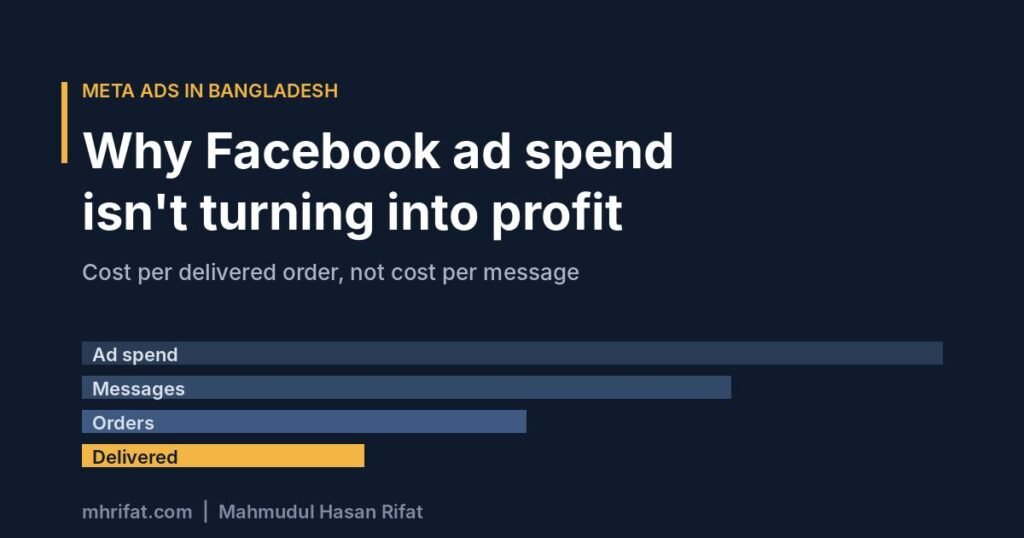
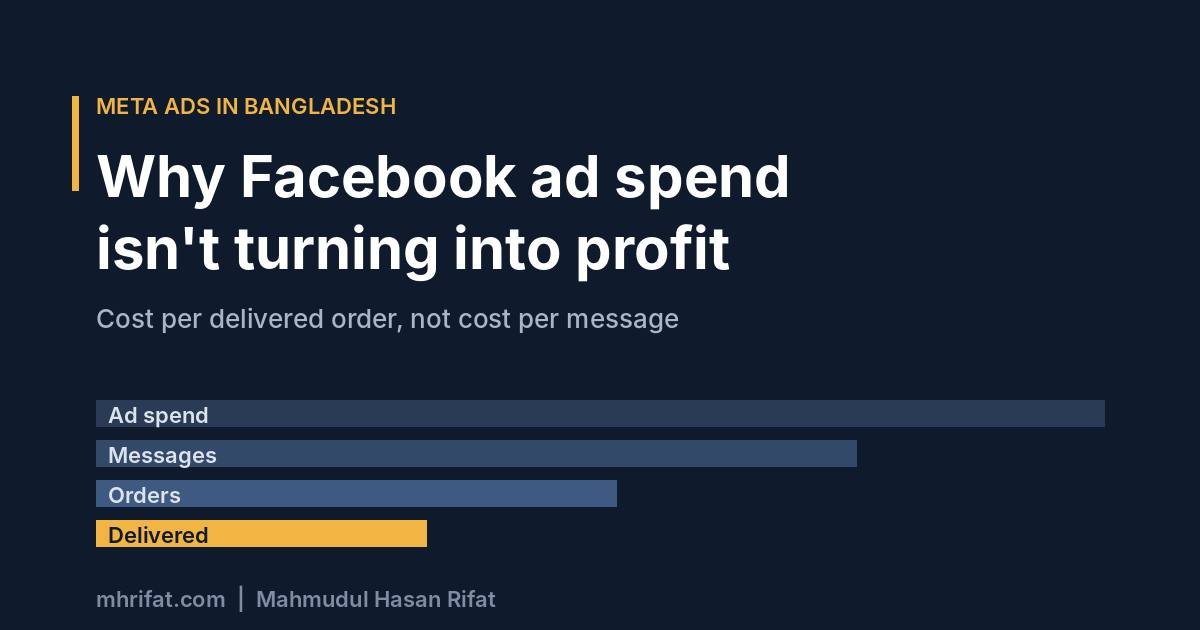
Running Ads Without Tracking Sales
Clicks and messages are not the final business outcome.
Track what happens after the lead arrives.
Ignoring Google Search
Many customers research products, companies, services, reviews, prices, and alternatives before making a purchase.
Treating Social Media as the Entire Brand
Social media is a channel.
Your website, search visibility, reviews, customer service, product quality, sales process, and offline experience all contribute to your brand.
Trying to Target Everyone
A clearly defined audience usually gives your marketing a stronger starting point than trying to appeal to everyone simultaneously.
Brand Launch Checklist for Bangladesh
Use this checklist before your official launch.
Strategy
- Target customer defined
- Customer problem identified
- Market research completed
- Competitor research completed
- Brand positioning defined
- Offer finalized
- Pricing strategy prepared
Branding
- Brand name finalized
- Domain checked
- Visual identity created
- Brand voice defined
- Packaging prepared where applicable
- Marketing assets prepared
Digital Presence
- Website launched
- Website optimized for mobile
- Google Business Profile configured where applicable
- Social media profiles secured
- Analytics installed
- Conversion tracking configured
- Contact systems tested
SEO
- Keyword research completed
- Search intent mapped
- Website architecture planned
- Title tags optimized
- Meta descriptions written
- Heading structure optimized
- URLs optimized
- Internal links added
- Image alt text added where useful
- Structured data implemented where appropriate
- Sitemap submitted
- Indexing checked
Marketing
- Pre-launch campaign prepared
- Launch campaign prepared
- Content calendar prepared
- Advertising creatives prepared
- Paid media strategy prepared
- Retargeting strategy considered
- Partnerships considered
Sales
- Lead response process established
- Follow-up process established
- CRM or lead tracking configured
- Sales scripts prepared where needed
- Customer support process established
Measurement
- KPIs defined
- Conversion tracking tested
- Customer acquisition cost measured
- Lead quality monitored
- Revenue tracked
- Optimization process established
How Much Does It Cost to Launch a Brand in Bangladesh?
There is no single cost for launching a brand in Bangladesh.
The investment depends on:
- Industry
- Product development
- Inventory
- Branding
- Packaging
- Website
- Technology
- Location
- Team
- Distribution
- Advertising
- Influencer partnerships
- Customer acquisition strategy
A local service business may require a very different budget from a consumer-product company, restaurant, hotel, real estate business, or technology startup.
Instead of asking only:
“How much does it cost to launch a brand?”
Ask:
“What investment do we need to validate the offer and build a repeatable customer acquisition channel?”
That question gives founders a more useful framework for planning.
When Should You Hire a Digital Marketing Consultant?
You do not need to outsource every marketing activity from day one.
However, professional support can be useful when you face problems such as:
- Unclear positioning
- Poor online visibility
- Weak SEO
- Low-quality leads
- High advertising costs
- Poor website conversion
- Difficulty reaching high-value customers
- Lack of measurable marketing strategy
- Difficulty scaling customer acquisition
- No clear understanding of why campaigns are underperforming
The role should not simply be:
“Run Facebook ads.”
A strategic digital marketing consultant can help connect:
Business strategy + positioning + SEO + AI search visibility + content + paid acquisition + conversion + analytics
into one system.
For established companies, the challenge is often not producing more marketing.
It is identifying which part of the existing system is preventing growth.
What Should You Do After Launch?
The launch is not the end of the process.
It is the beginning of the learning cycle.
During the first 30–90 days, investigate:
- Which customers are responding?
- Which message produces the strongest response?
- Which products or services generate the most demand?
- Which channels produce qualified customers?
- What objections prevent purchases?
- Which content attracts meaningful traffic?
- Which keywords generate commercial intent?
- Where are potential customers dropping out?
- What does customer feedback reveal?
- Which marketing activities should receive more attention?
Do not treat the original launch strategy as permanent.
Use real customer behaviour to improve it.
The Last Call for Your New Brand
Launching a brand in Bangladesh is not simply about creating a logo, opening a Facebook page, and running advertisements.
It is about building a connected system.
Research the market. Understand the customer. Solve a real problem. Position the brand clearly. Build trust. Create a strong digital presence. Make the brand discoverable through search. Generate demand. Connect marketing with sales. Measure the results. Then improve continuously.
For founders, the most important question after launching is not:
“How much reach did we get?”
It is:
“Did we build a system that can consistently turn the right audience into customers?”
If your brand is preparing to launch and you are unsure about the target market, positioning, digital strategy, SEO, AI search visibility, advertising, or conversion process, the first step should not necessarily be spending more money.
Find the bottleneck first. Then build the marketing system around it.