
For hotels in Bangladesh, increasing direct bookings is no longer simply a matter of running more Facebook ads or listing rooms on online travel agencies.
Today’s hotel guest may discover a property through Google Search, Google Maps, social media, an online travel platform, a travel article, or an AI-powered search experience. They may then compare hotels, check room prices, read reviews, look at photos, investigate facilities, visit the hotel’s website, contact the hotel through WhatsApp and only then decide where to make the reservation.
This creates a critical challenge for hotel owners and management teams:
How do you turn online discovery into more direct reservations?
A hotel can have excellent rooms, a strong location and competitive pricing but still lose potential guests because its website is difficult to use, its Google visibility is weak, its direct-booking proposition is unclear, its reviews do not build enough confidence, or its sales team is not converting inquiries effectively.
The solution is not one marketing channel.
Hotels in Bangladesh need a connected customer-acquisition system involving hotel SEO, Google Search, Google Maps, paid advertising, website conversion optimization, social media, reviews, WhatsApp, content marketing, corporate sales and customer retention.
This guide explains how hotels can build that system and increase the number of guests who book directly.
What Is a Direct Hotel Booking?
A direct hotel booking is a reservation made through the hotel’s own channels instead of through a third-party booking platform.
Common direct booking channels include:
- Official hotel website
- Online booking engine
- Phone
- Corporate sales
- Repeat guests
- Walk-in reservations
Online travel agencies can be valuable sources of visibility and new customers. The objective is not necessarily to eliminate them.
The objective is to build enough direct demand that the hotel is not completely dependent on third-party platforms for customer acquisition.
A strong hotel distribution strategy can use OTAs for reach while simultaneously developing the hotel’s own website, customer database, reputation and direct-booking channel.
Why Should Hotels in Bangladesh Focus on Direct Bookings?
Direct bookings give a hotel greater control over the customer relationship and booking experience.
When a guest interacts directly with the hotel, the property can communicate with that guest before arrival, during the stay and after departure. This creates opportunities for upselling, repeat bookings, loyalty programs, corporate relationships and future communication.
However, guests will not automatically choose the hotel’s direct channel.
They need a reason to do so.
A potential customer might compare:
Google Search → Hotel Website → Reviews → OTA → Competitor Website → WhatsApp → Booking
If the hotel’s own website is slower, harder to use or less informative than the alternatives, the customer may leave before making a direct reservation.
Therefore, the goal is not simply:
Get more website visitors.
The goal is:
Turn qualified hotel demand into direct revenue.
What Is Preventing Your Hotel From Getting More Direct Bookings?
Before increasing the marketing budget, identify where the customer journey is breaking.
A hotel may have a:
Visibility problem
Potential guests are not finding the property when searching for accommodation.
Click problem
The hotel appears in search results but does not attract enough attention.
Trust problem
People discover the hotel but do not have enough confidence to book.
Website problem
Visitors arrive but cannot quickly understand the hotel’s rooms, facilities, pricing or policies.
Booking problem
Customers want to book but the reservation process is complicated.
Pricing communication problem
Customers cannot easily understand what is included in the rate.
Sales problem
The hotel receives calls or WhatsApp inquiries but does not convert enough of them.
Channel problem
The hotel receives bookings through OTAs but very few through its own website.
Retention problem
Guests stay once but do not return.
These are completely different problems.
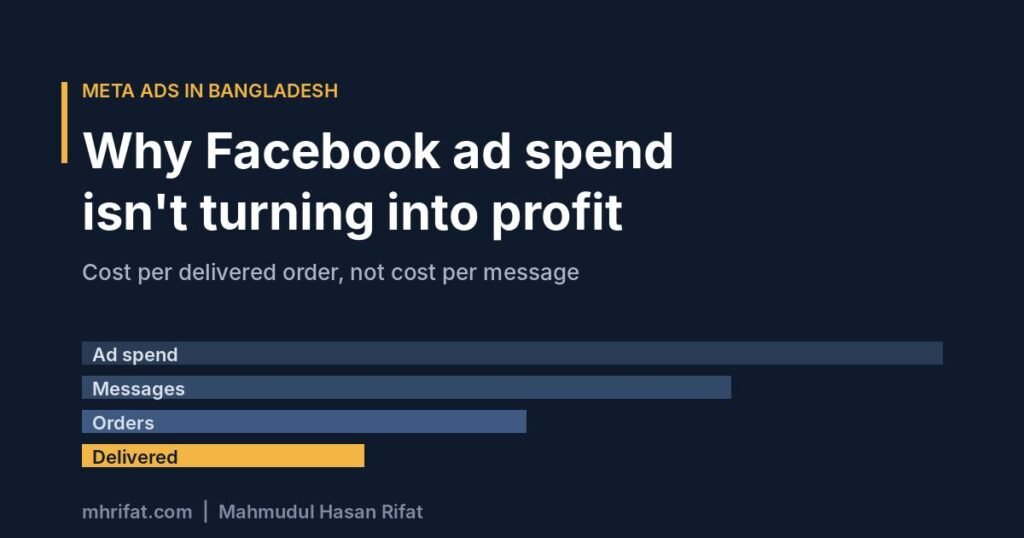
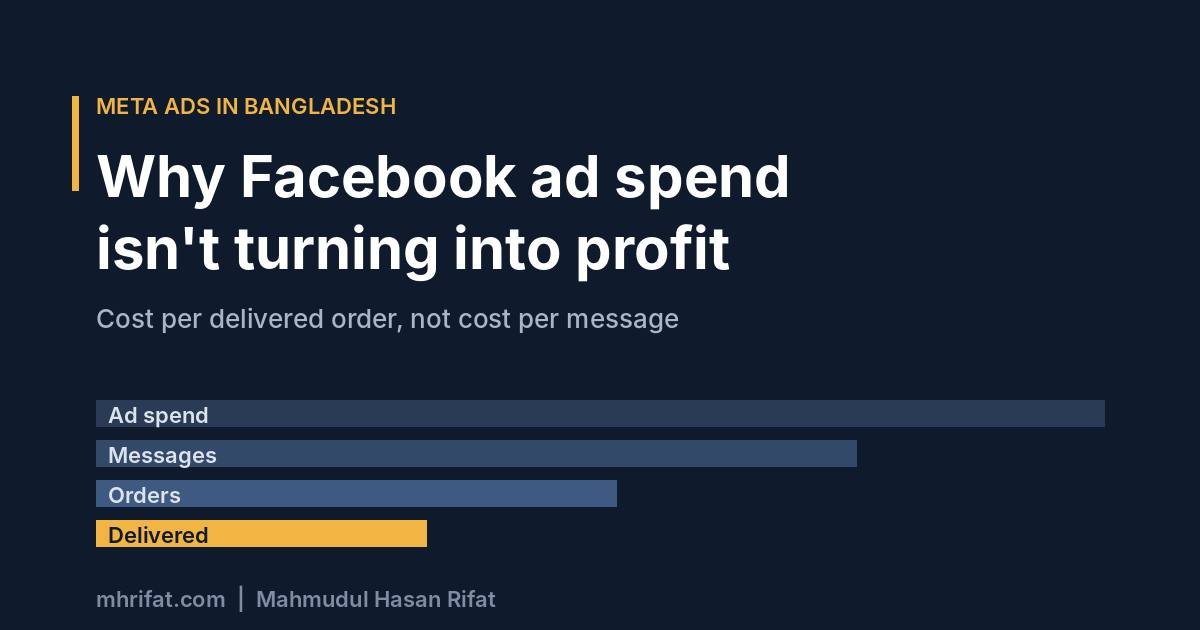
Increasing advertising spend without identifying the actual bottleneck can simply increase marketing costs.
How Can Hotels Increase Direct Bookings in Bangladesh?
A practical direct-booking strategy should connect ten major areas:
- Customer and search research
- Hotel SEO
- Google Maps visibility
- Website conversion
- Direct-booking offers
- Google Ads
- Reviews and reputation
- WhatsApp and assisted booking
- Corporate and event marketing
- Measurement and optimization
The objective is to create one connected customer journey from discovery to reservation.
1. Research What Hotel Guests Are Searching For
Before investing heavily in advertising, understand what potential guests actually search for.
Different guests have different reasons for booking accommodation.
Hotel demand in Bangladesh can come from:
- Business travelers
- Domestic tourists
- International visitors
- Families
- Couples
- Corporate travelers
- Medical travelers
- Airport travelers
- Long-stay guests
- Wedding guests
- Conference attendees
- Event organizers
- Government and institutional travelers
- Visiting expatriates
- Corporate groups
Their search behaviour can be completely different.
A business traveler may search:
Business hotel in Dhaka
A tourist may search:
Hotels in Cox’s Bazar
An airport traveler may search:
Hotel near Dhaka airport
A company may search:
Corporate accommodation in Dhaka
An event organizer may search:
Conference venue in Dhaka
The hotel should identify these different customer intents before deciding which keywords, pages and campaigns to build.
2. Target Different Stages of Hotel Search Intent
Not every hotel search means the same thing.
Informational intent
The customer is still learning.
Examples:
- Where should I stay in Dhaka?
- Where is the best area to stay for business?
- What should I consider when booking a hotel?
Commercial investigation
The customer is comparing options.
Examples:
- Hotels near Dhaka airport with breakfast
- Business hotels in Dhaka
- Family hotels in Cox’s Bazar
- Hotels with conference facilities
Transactional intent
The customer is closer to booking.
Examples:
- Hotel room booking in Dhaka
- Hotel booking Cox’s Bazar
- Hotel room price
- Hotel near me
Navigational intent
The customer already knows the hotel.
Examples:
- Hotel name booking
- Hotel name phone number
- Hotel name room price
Your SEO and advertising strategy should cover the search intents that are commercially relevant to the property.
3. Build Hotel SEO Around Real Customer Needs
Hotel SEO should not be limited to ranking for the hotel’s brand name.
A property can create useful content and landing pages around relevant combinations of:
Location + accommodation
Location + business travel
Location + facilities
Location + events
Location + travel purpose
For example:
- Business Hotel in Dhaka
- Hotel Near Dhaka Airport
- Family Hotel in Cox’s Bazar
- Corporate Accommodation in Dhaka
- Conference Hotel in Dhaka
- Hotel Near Major Attractions
- Long-Stay Hotel Accommodation
However, each page should provide genuinely useful information.
Do not create dozens of nearly identical pages simply by changing the city name.
The page should explain why the hotel is relevant to that location or customer need.
Include:
- Location information
- Distance to relevant places
- Facilities
- Room types
- Photos
- Policies
- Booking information
- Transportation information
- FAQs
- Contact options
This creates useful pages for people rather than pages created only for search engines.
4. Make Google Maps a Core Hotel Marketing Channel
A large number of hotel discovery journeys happen through location-based search.
Potential guests may search for hotels in a city, near an airport, near a tourist attraction or close to a particular business district.
Google Business Profile should therefore be treated as an important part of hotel marketing.
Maintain accurate information for:
- Hotel name
- Address
- Phone number
- Website
- Hotel category
- Photos
- Amenities
- Business information
- Booking options where available
- Review responses
Use high-quality, authentic photographs.
Show the actual:
- Exterior
- Lobby
- Rooms
- Bathrooms
- Restaurant
- Breakfast
- Pool
- Conference facilities
- Event spaces
- Views
- Parking
The profile should help someone decide whether the property deserves further consideration.
5. Build a Hotel Website Designed for Direct Reservations
A hotel’s website should not be treated as a digital brochure.
It should function as a conversion platform.
A visitor should quickly understand:
- What type of hotel it is
- Where it is located
- Which rooms are available
- What each room includes
- What facilities are available
- What the booking process looks like
- What policies apply
- How to contact the hotel
- How to make a reservation
The booking CTA should be visible throughout the website.
Do not make users search for the booking button.
Do not hide important information behind multiple clicks.
Do not force a customer to contact the hotel simply to discover basic information that could be provided on the website.
A strong booking journey should look something like:
Room Selection → Dates → Availability → Guest Details → Payment → Confirmation
The fewer unnecessary obstacles, the easier it becomes for qualified visitors to convert.
6. Optimize the Hotel Website for Mobile Users
A hotel website that looks excellent on desktop but performs poorly on smartphones can lose potential bookings.
Check:
- Mobile loading speed
- Button size
- Navigation
- Room galleries
- Booking engine
- Forms
- WhatsApp access
- Phone links
- Pricing display
- Payment process
- Readability
A visitor should be able to research and start a reservation from a mobile device without struggling.
Mobile optimization is not only a technical SEO issue.
It is a revenue issue.
7. Give Customers a Reason to Book Direct
A simple:
Book Direct
message may not be enough.
A hotel can create a direct-booking value proposition using commercially appropriate benefits such as:
- Direct booking rates
- Complimentary breakfast
- Flexible cancellation where available
- Room upgrades subject to availability
- Early check-in subject to availability
- Late check-out subject to availability
- Airport transfer packages
- Welcome amenities
- Loyalty benefits
- Corporate booking benefits
- Direct customer assistance
The hotel does not necessarily need to offer the lowest possible price.
The goal is to communicate why booking directly provides value.
8. Create Dedicated Landing Pages for High-Value Demand
The homepage cannot effectively answer every customer’s question.
Create focused pages for important commercial opportunities.
For example:
Business Travelers
Business Hotel in Dhaka
Explain workspace-related facilities, Wi-Fi, location, breakfast, transport and corporate services.
Airport Travelers
Hotel Near Dhaka Airport
Explain distance, transportation, airport transfer options, check-in flexibility and relevant services.
Corporate Clients
Corporate Hotel Accommodation in Bangladesh
Explain corporate rates, billing, long stays, meeting facilities and account support.
Events
Conference and Meeting Venue in Dhaka
Explain capacity, room layouts, equipment, catering and event support.
Weddings
Wedding Venue and Hotel Packages
Explain accommodation, venue, catering, event facilities and packages.
Each landing page should be built around a real customer need.
9. Create Content Before Customers Decide Which Hotel to Book
Hotels can attract potential guests before they search for a specific property.
For example:
- Where to Stay in Dhaka for a Business Trip
- How to Choose a Hotel Near Dhaka Airport
- What to Consider Before Booking a Hotel in Cox’s Bazar
- Where Should Families Stay in Sylhet?
- How Much Does a Hotel Stay in Dhaka Cost?
- What Should Business Travelers Look for in a Hotel?
- How to Choose a Conference Venue in Dhaka
The article should answer the question thoroughly.
Then, where relevant, connect readers to the hotel’s accommodation, facilities or booking pages.
This creates a path from:
Information → Consideration → Hotel → Booking
rather than trying to capture only people who are already searching for the hotel’s name.
10. Use Google Ads to Capture High-Intent Hotel Searches
Google Ads can help hotels reach customers who are already searching for accommodation.
But campaign structure matters.
Separate campaigns can be built around:
Brand intent
People searching for the hotel name.
Location intent
People searching for hotels in the relevant city or area.
Accommodation intent
People searching for rooms or specific hotel requirements.
Event intent
People searching for conference, wedding or event venues.
Corporate intent
Businesses looking for accommodation solutions.
The landing page should match the search.
If someone searches:
Conference venue in Dhaka
send them to the conference page.
If someone searches:
Hotel near Dhaka airport
send them to the airport-focused page.
If someone searches for the hotel’s brand, take them directly toward booking.
Search intent and landing-page relevance should work together.
11. Retarget Potential Guests Who Did Not Book
Many hotel visitors do not make an immediate reservation.
They may be:
- Comparing properties
- Waiting for travel confirmation
- Discussing the trip with family
- Checking prices
- Waiting for corporate approval
- Reading reviews
- Comparing dates
Retargeting can remind qualified visitors about the hotel.
Messages could include:
Still Planning Your Stay in Dhaka?
Check Available Rooms for Your Dates
Explore Our Direct Booking Benefits
Planning Your Next Business Trip?
Retargeting should be relevant rather than repetitive.
12. Turn WhatsApp Into a Structured Sales Channel
WhatsApp can be an important hotel inquiry channel in Bangladesh.
Customers may use it to ask:
- Is a room available?
- What is the price?
- Is breakfast included?
- Do you provide airport transfers?
- Do you have family rooms?
- Can I book for a group?
- Do you have corporate rates?
- Can I arrange a conference?
The problem begins when every inquiry goes into one unstructured inbox.
Build a process:
Advertisement / Website
↓
WhatsApp Inquiry
↓
Guest Requirement
↓
Availability
↓
Relevant Offer
↓
Booking Link or Confirmation
↓
Customer Record
This makes WhatsApp part of the hotel’s sales process instead of simply another messaging application.
13. Improve Response Speed and Sales Follow-Up
Generating an inquiry is not the same as generating a booking.
A hotel should measure what happens after a customer contacts the property.
Track:
- Response time
- Number of follow-ups
- Information provided
- Offer presented
- Booking status
- Reason for lost booking
- Customer segment
- Source of inquiry
If hundreds of customers contact the hotel but very few book, increasing advertising may not solve the problem.
The sales process may need attention first.
14. Use Reviews to Build Booking Confidence
Hotel customers want reassurance before paying.
Reviews can provide information about:
- Cleanliness
- Staff
- Location
- Rooms
- Food
- Service
- Facilities
- Check-in
- Overall experience
Hotels should create a legitimate process for asking guests for feedback after their stay.
Do not manufacture or manipulate reviews.
Instead, encourage genuine guests to share their experiences.
Then monitor recurring feedback.
If guests repeatedly praise something, consider communicating that strength more clearly.
If guests repeatedly complain about something, investigate the operational issue.
Marketing cannot permanently compensate for a poor guest experience.
15. Show the Real Hotel Experience on Social Media
A hotel should not use social media only for room-rate graphics.
Show what the guest actually experiences.
Content can include:
- Room walkthroughs
- Breakfast
- Restaurant
- Pool
- Lobby
- Views
- Hotel exterior
- Nearby attractions
- Events
- Wedding setups
- Conference facilities
- Guest experiences
- Seasonal packages
- Corporate facilities
Original photographs and video can also provide useful visual information for customers researching the property.
The objective is simple:
Make the customer understand the experience before arrival.
16. Build Hotel Packages Around Customer Intent
Instead of promoting only room prices, package the experience around specific customer needs.
Examples include:
Business Stay Package
Room + breakfast + Wi-Fi + business-related facilities
Family Stay Package
Room + breakfast + family-oriented benefits
Airport Stay Package
Room + airport transfer
Weekend Package
Room + dining or experience benefits
Wedding Package
Accommodation + venue + catering
Corporate Package
Accommodation + meeting facilities + corporate terms
Packages can make the hotel’s value easier to understand without relying entirely on room-rate discounts.
17. Build a Separate Corporate Hotel Marketing Strategy
Hotels can generate recurring demand through corporate relationships.
Potential customers can include:
- Banks
- Technology companies
- Universities
- NGOs
- Hospitals
- Manufacturing companies
- International organizations
- Travel companies
- Large businesses
- Corporate event organizers
Create a dedicated corporate accommodation page explaining:
- Corporate rates
- Billing options
- Long-stay arrangements
- Meeting facilities
- Wi-Fi
- Dining
- Airport transfers
- Group accommodation
- Dedicated support
The page should make it easy for a company to understand how to start a corporate relationship with the hotel.
18. Market Weddings, Conferences and Events Separately
Hotels often have substantial revenue opportunities beyond room bookings.
These can include:
- Weddings
- Conferences
- Seminars
- Corporate meetings
- Product launches
- Training sessions
- Private events
- Exhibitions
Each audience has a different need.
Instead of creating one generic events page, create focused pages where the hotel genuinely provides the service.
Examples:
Corporate Conference Venue in Dhaka
Wedding Venue in Chattogram
Meeting Room in Dhaka
Hotel Wedding Packages in Bangladesh
Include:
- Venue capacity
- Layout options
- Catering
- Equipment
- Parking
- Photos
- Location
- Packages
- Inquiry process
19. Optimize Hotel Content for AI Search
Hotel discovery is becoming increasingly conversational.
A potential guest may ask:
Which hotels are near Dhaka airport?
Where should I stay in Dhaka for a business trip?
Which hotels in Cox’s Bazar are suitable for families?
Which hotels have conference facilities in Dhaka?
This means hotel websites should provide clear and trustworthy information that directly answers these questions.
Make important information easy to discover:
- Hotel location
- Room types
- Facilities
- Amenities
- Booking options
- Policies
- Nearby attractions
- Business facilities
- Event facilities
- Contact information
- Relevant pricing information
- Frequently asked questions
The important point is that there is no secret “AI ranking trick.”
Google’s guidance for AI features emphasizes the same fundamental principles that support Search generally: crawlable and indexable pages, helpful and reliable content, strong page experience, internal links, high-quality images and accurate structured information.
Therefore, instead of creating content specifically designed to manipulate AI systems, build pages that are genuinely useful when a customer asks a detailed question.
20. Make Hotel Information Easy for Search Engines and AI Systems to Understand
A hotel’s important information should be clear and consistent.
Pay attention to:
- Hotel name
- Address
- Phone number
- Website
- Room information
- Amenities
- Policies
- Location
- Business information
- Booking options
- Event facilities
Use appropriate structured data where applicable.
For example, hotel websites may use relevant structured data describing the hotel, organization, breadcrumbs, articles and other appropriate entities.
The markup should accurately represent information visible on the page.
Structured data should support understanding.
It should not be used to insert claims that customers cannot see on the website.
21. Build a Strong Internal Linking Structure
A hotel’s website should have a logical network of related pages.
For example:
Hotel
→ Rooms
→ Facilities
→ Restaurant
→ Location
→ Business Accommodation
→ Events
→ Wedding
→ Airport Transfer
→ Travel Guide
→ Booking
A useful internal linking structure helps visitors discover relevant information and helps search engines understand relationships between pages.
For a hotel marketing website, this can create a strong topical structure around the property and its services.
22. Keep Hotel Information Consistent Across the Web
A hotel’s information may appear on:
- Official website
- Google Business Profile
- Online travel platforms
- Travel websites
- Maps
- Review platforms
- Business directories
- News websites
Important information should remain consistent wherever possible.
Pay particular attention to:
Name
Address
Phone number
Website
Amenities
Room information
Photos
Policies
Booking information
Inconsistent information can create confusion for both customers and search systems.
23. Track the Complete Hotel Booking Funnel
Do not measure hotel marketing only through impressions and clicks.
Track the entire journey.
Impression
↓
Click
↓
Website Visit
↓
Room Search
↓
Booking
↓
Revenue
For WhatsApp and phone:
Advertisement
↓
Inquiry
↓
Qualified Guest
↓
Availability
↓
Reservation
For corporate and event sales:
Lead
↓
Qualified Opportunity
↓
Proposal
↓
Negotiation
↓
Confirmed Booking
This allows hotel management to identify exactly where the commercial problem exists.
24. Measure Revenue Instead of Vanity Metrics
Useful hotel marketing metrics include:
- Direct booking conversion rate
- Direct booking revenue
- Cost per booking
- Average booking value
- Website conversion rate
- Google Ads conversion rate
- Organic booking contribution
- WhatsApp conversion rate
- Phone inquiry conversion
- Corporate booking revenue
- Event inquiry conversion
- Repeat booking rate
- Cancellation rate
- Revenue by campaign
- Revenue by customer segment
- Revenue by booking channel
Followers and impressions can still be useful marketing indicators.
But hotel management should ultimately connect marketing activity with bookings and revenue.
25. Diagnose Before Increasing the Advertising Budget
Suppose a hotel says:
“We need more bookings.”
The next question should be:
Why aren’t enough bookings happening?
If the hotel has low search visibility, the problem may be acquisition.
If it has strong traffic but low bookings, the problem may be conversion.
If it has many inquiries but few reservations, the problem may be sales follow-up.
If it receives strong OTA bookings but weak direct reservations, the direct channel may need improvement.
If guests rarely return, the hotel may have a retention or guest-experience opportunity.
Every situation requires a different solution.
More advertising is not automatically the answer.
A 90-Day Direct Booking Strategy for Hotels
Days 1–30: Diagnose
Audit:
- Website
- Booking engine
- Google Business Profile
- SEO
- Search visibility
- Competitors
- Reviews
- Social media
- Google Ads
- OTA presence
- Direct booking proposition
- Sales follow-up
- Conversion funnel
Then identify the biggest commercial bottleneck.
Days 31–60: Build and Test
Improve:
- Website conversion
- Booking experience
- Local SEO
- Location pages
- High-intent landing pages
- Direct-booking proposition
- Google Ads
- Retargeting
- WhatsApp conversion
- Corporate landing pages
- Event pages
- Helpful content
Then test different audiences, offers and messages.
Days 61–90: Optimize for Revenue
Analyze:
- Direct bookings
- Revenue
- Acquisition cost
- Conversion rate
- Lead quality
- Customer segment
- Location
- Campaign
- Landing page
- Device
- Booking channel
Then allocate more resources toward the channels demonstrating measurable commercial value.
The Hotel Direct Booking Framework
A hotel’s digital growth system can be simplified into six stages:
BE DISCOVERED
Google Search + Google Maps + SEO + Content + Paid Search
↓
BUILD TRUST
Reviews + Website + Photos + Reputation + Accurate Information
↓
CREATE INTEREST
Offers + Packages + Social Media + Retargeting
↓
MAKE BOOKING EASY
Booking Engine + WhatsApp + Phone + Website
↓
CONVERT
Reservation + Payment + Confirmation
↓
RETAIN
CRM + Repeat Stays + Loyalty + Direct Communication
The objective is to make these stages work together.
Frequently Asked Questions About Hotel Direct Bookings in Bangladesh
How can hotels increase direct bookings in Bangladesh?
Hotels can increase direct bookings by improving their website and booking experience, strengthening Google Search and Google Maps visibility, targeting high-intent searches, creating useful content, offering clear direct-booking benefits, using Google Ads and retargeting, improving reviews, using WhatsApp effectively and developing corporate and repeat-customer channels.
Why are direct hotel bookings important?
Direct bookings give hotels greater control over the customer relationship and booking journey. They can also create opportunities for repeat stays, loyalty programs, customer communication, upselling and long-term corporate relationships.
How can SEO help hotels get more bookings?
Hotel SEO helps potential guests discover a property when they search for hotels, locations, facilities, events and travel-related needs. Local SEO is particularly important because many accommodation searches include a destination, neighbourhood or nearby location.
How can a hotel get more bookings from Google?
A hotel can improve its Google visibility through accurate business information, local SEO, useful website pages, relevant landing pages, high-quality images, genuine reviews, appropriate paid search campaigns and a clear booking experience.
Should hotels stop using OTAs?
Not necessarily. OTAs can provide valuable visibility and customer acquisition. A hotel can use third-party platforms while simultaneously building its own direct demand, website traffic, customer relationships and repeat bookings.
How can hotels use WhatsApp to increase bookings?
Hotels can use WhatsApp for availability questions, booking assistance, corporate inquiries, group reservations, special requests and event inquiries. A structured response and follow-up process helps turn conversations into reservations.
What should hotels advertise on Google?
Hotels can advertise relevant high-intent searches around their brand, location, accommodation, facilities, events and corporate requirements. Each important search intent should lead to a relevant landing page rather than a generic homepage.
How long does hotel SEO take?
The timeframe varies depending on competition, location, existing website authority, technical condition, content quality and search demand. SEO should generally be treated as a long-term customer acquisition channel rather than an instant booking tactic.
What should a hotel website include?
A hotel website should clearly communicate rooms, facilities, location, photos, policies, relevant pricing information, contact options and booking methods. The booking path should be easy to find and use on mobile devices.
Final Thoughts
Increasing direct bookings in Bangladesh is not simply a matter of spending more money on Facebook or Google Ads.
The real opportunity is to understand the complete customer journey:
Search → Discovery → Comparison → Trust → Inquiry → Booking → Stay → Repeat Booking
A hotel can strengthen this journey through:
SEO
Google Maps
Google Ads
Website conversion optimization
Direct-booking offers
Reviews
Content marketing
Corporate marketing
Event marketing
Retargeting
CRM
Conversion optimization
But these channels should not operate independently.
If a hotel has low visibility, improve qualified discovery.
If it has visibility but little traffic, improve search positioning and messaging.
If it has traffic but few bookings, investigate the website and booking experience.
If it has inquiries but few reservations, investigate sales response and follow-up.
If it receives many OTA bookings but few direct reservations, strengthen the direct channel.
If guests stay once but rarely return, investigate guest experience and retention.
The most useful question for a hotel owner or management team is therefore not simply:
“How can we run more ads?”
It is:
“Where are we losing potential guests between discovering our hotel and completing a booking?”
Once that problem is identified, the right digital marketing strategy becomes much clearer.
About the Author
This guide is written for hotel owners, general managers, hospitality businesses, sales and marketing teams, and decision-makers looking to improve digital customer acquisition and direct booking performance in Bangladesh.
If a hotel is receiving website traffic, inquiries, social engagement or OTA bookings but direct reservations are not growing as expected, the first step should be understanding the complete customer journey.
A structured marketing audit can examine search visibility, Google Maps, SEO, paid advertising, website conversion, booking experience, reviews, WhatsApp, corporate acquisition, customer retention and sales follow-up to identify where the largest opportunity exists.